Drs. Dash and Somasundaram win AHW Momentum Grants 2026
September 18, 2026
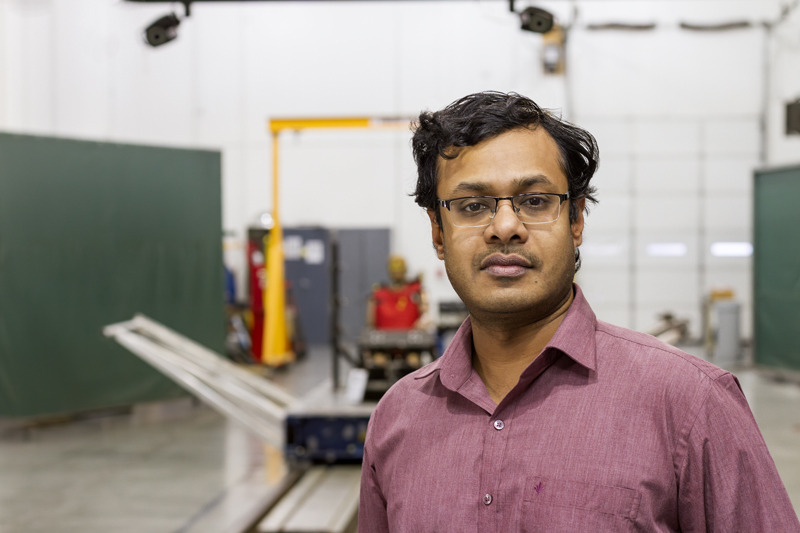 Drs. Karthik Somasundaram and Ranjan Dash have each been awarded a Momentum Grant from the Advancing a Healthier Wisconsin Endowment. These competitive awards provide $250,00 for two-year projects addressing pressing healthcare challenges in the state of Wisconsin. With these awards, Drs. Somasundaram and Dash are advancing two very different but equally important efforts. Dr. Somasundaram will look to make child passengers safer on Wisconsin roads. Dr. Dash will work to increase the number of donor livers available for transplant after preservation.
Making Child Passengers Safer on Wisconsin Roads
Motor vehicle accidents are the second leading cause of adolescent mortality and the leading cause for accidental adolescent mortality in the state of Wisconsin. Relatedly, it has been determined that nearly two-thirds of infant injuries caused by motor vehicle accident involve improper use of safety equipment, such as child’s car seat, booster seat or safety belt. While state-level reporting agencies collect evidence regarding adolescent injury and motor vehicle accidents, this evidence is not currently being aggregated or analyzed in a way that would support targeted prevention strategies.
Dr. Karthik Somasundaram specializes in impact biomechanics and safety restraint systems, particularly those used in automotive vehicles and for children. For this project, Dr. Somasundaram will work with Dr. Frank Pintar, director of the Wisconsin Crash Injury Research Engineering Network Center, to cross-reference statewide crash surveillance data with hospital trauma records to identify representative crash scenarios. Dr. Somasundaram will then use these scenarios to perform pilot tests investigating biomechanical mechanisms underlying observed injury patterns. Data gleaned from the collation of the statewide crash surveillance data, hospital trauma records and pilot tests will be used to create a database that will support advancements in child safety restraint systems for automotive vehicles, inform community-based prevention strategies, and strengthen the injury metrics used in federal child-seat safety standards.
Dr. Somasundaram is an Assistant Professor of Biomedical Engineering and director of the Trauma Biomechanics Laboratory at the Marquette University and Medical College of Wisconsin Joint Department of Biomedical Engineering. His research focuses on the biomechanics of injury and safer restraint and vehicle design and includes collaborative investigations into injury tolerance in automotive and aviation environments. He is joined on this project by Dr. Frank Pintar, professor in the Marquette-MCW Joint Department of Biomedical Engineering and director of the Wisconsin Crash Injury Research Engineering Center, or CIREN, an entity that specializes in expert analysis and reconstruction of crash injury to humans in motor vehicle accidents.
LEARN MORE ABOUT DR. SOMASUNDARAM
LEARN MORE ABOUT THE TBM LAB
Increasing the Number of Donor Livers Available for Transplant
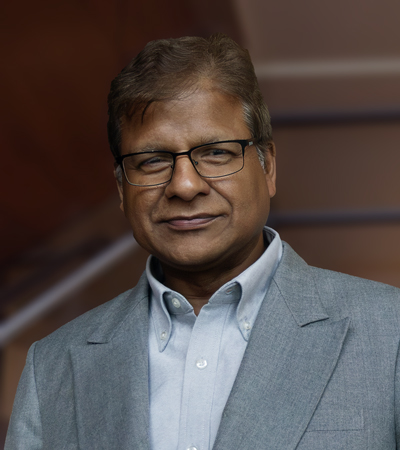 Donor livers intended for transplant need to be functional when they are placed into an individual’s body. The current methods used for assessing this functionality are subjective, rather than quantitative. Donor livers showing signs of mild-to-moderate disease, such as fatty liver disease, as well as livers experiencing injury caused by the applicable preservation methods or reperfusion, cannot be confidently verified as either viable or nonviable. As a result—and out of an abundance of caution—it is believed that a number of donated livers are discarded when in fact they may have served to save a person's life.
Dr. Dash and his collaborators want to increase the number of livers available for transplantation by creating a quantitative method of evaluating the viability of a donor liver, specifically one that has already been explanted, reperfused and preserved. This method will integrate fluorescence imaging with computational modeling, allowing real-time visualization and assessment of liver cellular function and structure prior to implantation.
End-stage liver failure in Wisconsin contributes to approximately 900 deaths and over $130 million in healthcare costs each year. Defining quantitative means of verifying the viability of an organ intended for transplant would reduce state-level healthcare expenditures and save lives. In addition, this platform will lay the groundwork for advancing post-preservation viability testing for other perfused organs, establishing a scalable precision tool for the field of organ precision science.
Dr. Ranjan Dash is a professor of Biomedical Engineering and co-director of graduate studies at the at the Marquette University and Medical College of Wisconsin Joint Department of Biomedical Engineering. His research combines computational modeling with experimental physiology to study metabolic and transport processes in health and disease. He is joined on this project by Dr. Amit Joshi and Dr. Said Audi. Dr. Joshi specializes in developing advanced imaging technologies for medical intervention. He is a professor of biomedical engineering and director of the Nanomedicine & Image-Guided Interventions Laboratory (NIGIL) at the Marquette-MCW Joint Department of Biomedical Engineering. Dr. Said Audi has a background in reperfusion injury and computational modeling of complex, multi-level biological systems. He is a professor of biomedical engineering and director of the Computational Lung Physiology Laboratory (CLPL) at the Marquette-MCW Joint Department of Biomedical Engineering.
LEARN MORE ABOUT DR. DASH
LEARN MORE ABOUT THE CSBL